Fertility preservation with cancer
Is it possible to have a child after cancer treatment?
Most people have very little desire to have children of their own at the moment of a cancer diagnosis. The bad news is too existential. But it is only in this very moment that in most cases there is a chance of preserving fertility.
The therapies available to us today in the fight against cancer often combat the disease much more effectively than even a few years ago. Many young patients are successfully overcoming the disease and, in principle, after the therapy and after complete recovery, they are able to start a family or have another child.
However, chemotherapy and radiotherapy remain highly toxic and can severely limit or completely eliminate fertility, meaning you may no longer be able to have children naturally.
Often the only chance to preserve your fertility exists only in the short window between the diagnosis and the start of cancer treatment. Be sure to discuss this openly with your oncologist if the planned therapy may have negative consequences for your family planning or ask for advice in a specialized center.
Therapeutic forms of cancer
Chemotherapy, radiation therapy and surgery
Treating a cancer is physically and mentally exhausting. The therapy is intended to destroy the cancer cells only, but unfortunately the medications also damage healthy organs and cells. In some cases, affected organs have to be partially or completely removed (ovaries or testicles).
Chemotherapy
Whether a woman can still have children after chemotherapy depends largely on three factors:
- Of the medication she is taking
- From the administered dose
- From your age at the start of therapy
In men, fertility is affected by the medication and the dose. Unlike a woman’s eggs, sperm can „reproduce“ as long as there are still a few stem cells left. The sperm production can then, if necessary, recover after the end of the therapy. However, this can take many months or even years. A semen sample can determine whether and to what extent the sperm recover. However, if all the stem cells have been destroyed by the treatment, the body cannot form new sperm. The man can no longer father children.
Radiation therapy
Radiation therapy can also reduce fertility in women and men, depending on the radiation dose and the number of sessions required.
Operations
Some cancers require the surgical removal of the affected organ. If only one ovary is removed in a woman, she usually retains her monthly menstrual bleeding and can become pregnant by the function of the remaining ovary. If both ovaries are removed, the woman can no longer become pregnant naturally.
If the uterus has to be removed, women in Germany can no longer receive fertility treatment because surrogacy is not permitted in Germany.
In men with testicular cancer, only one testicle is usually affected and then removed. The remaining testicle can usually be used to maintain fertility.
Options for preserving fertility
Freezing of eggs (fertilized and non-fertilized)
If irreversible damage to the germ cells cannot be ruled out after the chemotherapy you have undergone, freezing of the egg cells/ovarian tissue may be an option for fulfilling your later desire to have children.
Fertilized eggs
If the planned oncological treatment still leaves time and the right partner is already available, the eggs obtained during a IVF cycle can be fertilized and stored at -196°C for an indefinite period (so-called pre-embryos).
Unfertilized eggs
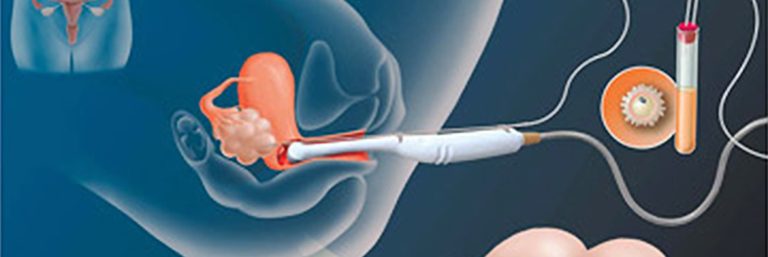
If the right partner is not yet available, a larger number of eggs can be obtained through hormonal stimulation (link methods of oocyte retrieval) and frozen as non-fertilized eggs by vitrification.
We explain the methods of oocyte retrieval to you here.
Tissue extraction and re-implantation after healing
In rare cases, where chemotherapy must be started immediately, ovarian tissue containing immature eggs can be surgically removed and frozen.
After completing cancer treatment, this tissue can be transplanted back into your body. For a certain period of time, the tissue then produces eggs again. The procedure is now well established and is routinely used on a regular basis.
However, despite several healthy children having been born after this method, there are limitations, because in theory there is a risk that deposits of the tumor are present in these cells of the ovary (so-called metastases), which could then be transferred back into your body and grow there. Therefore, not all tumor types are suitable for ovary transplantation.
Radiation
Before radiation therapy of the pelvis, the woman's ovaries can be surgically moved out of the radiation field to protect the eggs contained within them.
In men, it is usually much easier.
Men can have their sperm or testicular tissue that contains sperm frozen.
The time required for sperm freezing is very short. You can even give a semen sample on the same day the cancer treatment is scheduled to begin.
If you are unable to produce sperm due to your illness, you cannot donate sperm. In this case, testicular tissue can be extracted and frozen. This tissue contains fertile sperm that can be used for later treatment.
Cost reimbursement
The cost reimbursement for cancer treatment has finally been decided! On July 16, 2020, the Joint Federal Council (G-BA) decided that the cryopreservation of egg and sperm cells, as well as the associated medical procedures, will henceforth be covered by the statutory health insurance (GKV) under certain conditions. Therapies can be used in the treatment of diseases where there is a risk that they will impair fertility or lead to its loss. With the new directive on cryopreservation, the Joint Federal Council (G-BA) has concretized the entitlement of GKV insurance policyholders to the provision of cryopreservation of germ cells for subsequent fertility treatment.
Cryopreservation and the associated medical procedures are intended to provide patients with the opportunity to fulfill a desire to have a child later through artificial insemination, even after germ cell-damaging therapy.See the G-BA press release „Cryoconservation of Egg and Sperm Cells as a GKV Benefit – G-BA Adopts Directive“ of 16.7.2020)
As of today (September 15, 2020), we are still waiting for the implementation. For all patients who unfortunately have to start fertility preservation due to a cancer diagnosis, a transitional rule applies. We are happy to advise you.
If you have been diagnosed with a cancer, please email us. In these circumstances, we will allow you to schedule an appointment around this situation.
Alternatives to fertility preservation
Cancer treatment is physically and mentally demanding. After the end of the therapy, allow time and consider alternative options, such as adoption or foster care. You can obtain reliable information from the youth offices in your city.
Perhaps the decision to undergo a fertility preservation procedure is difficult for you in this situation, but try to think about it calmly.
Of course, this information text cannot replace the personal conversation. You probably still have many questions. Please do not hesitate to contact us with your concerns. Upon providing an indication of your situation, we will promptly arrange an appointment for a conversation with you.
More information