What are fibroids?
The term "myoma" was first used by the German pathologist Rudolf Virchow. Uterine myomas are benign tumors of the uterus. They consist of connective tissue, blood vessels, and smooth muscle. Intramural or submucous myomas can be detrimental to fertility.
Whether and to what extent fibroids cause discomfort depends on their size and location:
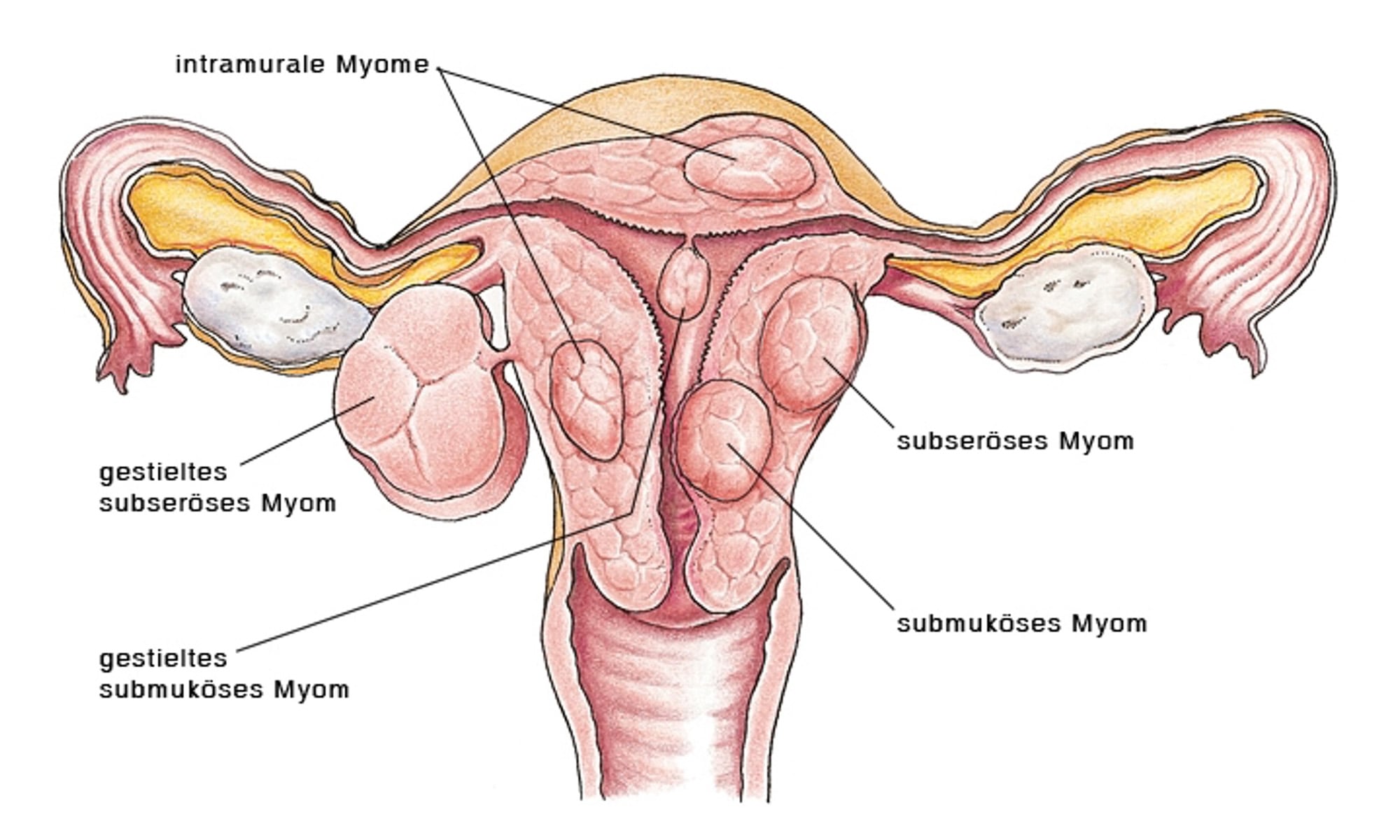
Intramural myomas
(in the muscle – approx. 50% of all myomas): They are probably the most common myomas and often lead to cramping pain, especially during menstruation. With massive growth in size, pressure on neighboring organs can also lead to obstruction and problems with urination. They can play a role in unwanted childlessness.
Subserous fibroids
(under the "skin" – approximately 35% of all myomas): They have little to no effect on menstruation, but can cause acute pain, especially if it is a pedunculated subserous myoma (twisted cord!). Frequent complaints are also back pain or pain in the surrounding organs. These myomas have no effect on fertility.
Submucous myomas
(under the uterine lining – approximately 10% of all fibroids): Submucosal fibroids are rarer, but can cause severe menstrual complaints and bleeding disorders; intermenstrual bleeding is also common. This type of fibroid plays a dominant role in unwanted childlessness.
Other myomas
(about 5% of all fibroids): These include, among others, cervical fibroids (at the cervix), parasitic fibroids. They can cause very different symptoms and pose differential diagnostic difficulties. Cervical fibroids can lead to birth-related problems.