Acupuncture
Acupuncture is a regulatory therapy that is part of traditional Chinese medicine. It is a treatment method whose origins date back over 2000 years.
It is based on the observation that stimulation of certain points on the human body can have pain-relieving, immunomodulatory, calming, or even blood-pumping effects.
Traditional Chinese medicine views problems such as infertility or pain only as part of disharmonies that affect the whole person. In this context, deficiencies, excesses, or even blockages of life energy or basic bodily substances can play a role.
The goal of treatment is always to balance these disharmonies and thereby allow the body to help itself in a regulatory manner.
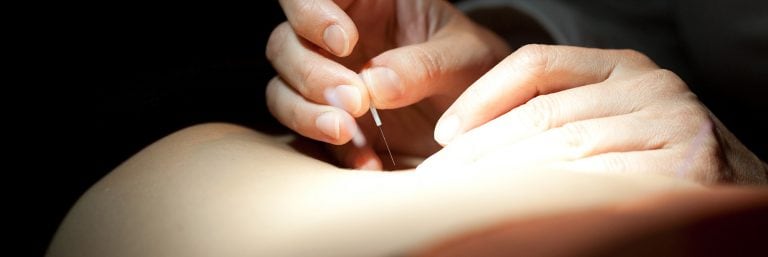
This is done by inserting small needles, but also by heating acupuncture points with Moxa (Artemisia argyi).
An acupuncture treatment consists of a detailed conversation (initial anamnesis), during which a diagnosis is made according to traditional Chinese medicine and based on this several acupuncture sessions are performed.
What does acupuncture treat?
We offer acupuncture treatment for the following indications:
- Support before and after embryo transfer
- Preparation and supervision of stimulation cycles
- Menstrual disorders
- Painful menstrual bleeding (dysmenorrhea) also occurs in the context of endometriosis
- Smoking cessation for couples with fertility problems
At what intervals is treatment given?
- Normally 1-2 per week, possibly daily for acute complaints. In the case of embryo transfer, for example, shortly before and after.
Duration of a session?
- The needles remain in the puncture sites for about 20 minutes.
Number of sessions
- Depending on the individual organism's responsiveness, the effect can be up to 10 times stronger. In the case of chronic diseases, several treatment cycles are often necessary.
Side effects
- Very few side effects are known. Rarely, redness, hematomas, or minor bleeding at the injection sites can occur; circulatory problems can also occur after an acupuncture session.