What is endometriosis?
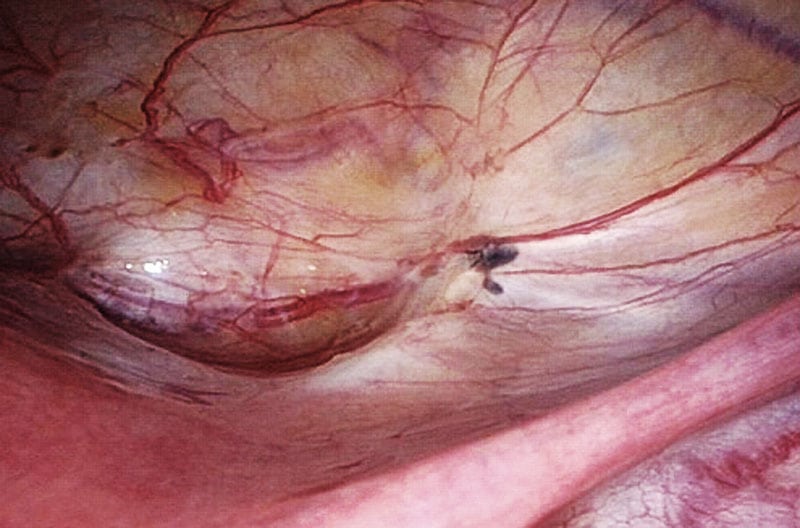
In endometriosis, tissue that resembles that of the uterine lining (Latin: endometrium) develops outside the uterus in the lower abdomen and settles on various organs, such as the uterus, abdominal wall, fallopian tubes, ovaries, bladder or intestines. In very rare cases, other organs are also affected, such as the lungs.
In most cases, these endometriosis clusters are influenced by the hormones of the menstrual cycle. As a result, the clusters can grow and bleed cyclically. This leads to inflammatory reactions, the formation of cysts, and the development of scarring and adhesions in the abdominal area. This can manifest itself in time-dependent symptoms in the painful symptoms of the menstrual cycle. Endometriosis is also one of the most common causes of infertility. But:
Pain during menstruation should not be the norm!
Why do so few women know about it?
The so-called „female distress“ was downplayed and trivialized for years. In fact, girls and women are affected from the first period until well into menopause.
Until the final Diagnosis Even today, in Germany, female patients suffer from the symptoms for between 7 and 11 years. Unfortunately, the disease is still unknown to many women. Many women think that they have to live with the pain during their periods. „That’s just normal,“ and „after the first child, it gets better.“ During this time, the tumors can grow to such an extent that many women are severely affected by the pain and remain with them. The adhesions that form can lead to unwanted childlessness.
Endometriosis represents not only an immense human problem but also a serious economic problem, which is also largely underestimated in modern Europe of the 21st century due to the traditional image of women.
What symptoms can endometriosis cause?
Endometriosis is a disease that can present itself in a very heterogeneous manner. Therefore, it is also referred to as a „chameleon“ among gynecological diseases. Due to the non-specific symptoms, misdiagnoses occur repeatedly, which is very distressing for the affected woman, not least because of the labeling as „psychologically unstable or over-emotional“.
Often, the complaints are not directly related to the severity of the disease. That is, minor findings can cause great pain. However, there are also endometriosis lesions without growth tendency and without any clinical significance.
The main symptoms of the disease are
1. Pain
- Typical symptoms are irregular periods that can lead to a feeling of illness, heavy medication intake, and inability to work.
- Pain during bleeding (dysmenorrhea)
- Sudden fainting attacks associated with menstrual pain
- Chronic lower abdominal pain
- Abdominal, back and joint pain that in some cases radiates to the legs before and during menstruation
- Pain during and after sexual intercourse (dyspareunia)
- Pain, bleeding and cramps during bowel movements / urination (dyschezia / dysuria)
- Pain during ovulation
2. Unfulfilled wish for children
- Unwanted childlessness It is a symptom that becomes increasingly common as the disease progresses. Approximately 30–40 % of the women with endometriosis are affected by it.
3. Bleeding disorders
- Heavy and/or irregular menstrual bleeding.
4. Uncharacteristic symptoms
- Fatigue and exhaustion
- Increased susceptibility to infections
- Back pain
- Diarrhea and/or constipation and other intestinal disorders
- Increased incidence of allergies and other autoimmune diseases
If you experience such or similar symptoms, please consult your doctor about endometriosis. Do not hesitate to seek a second opinion.
Am I an isolated case? How common is endometriosis?
Endometriosis is the second most common benign disease in women. According to conservative estimates, it affects approximately 10% of the sexually mature women. Endometriosis is responsible for up to 80% of the chronic lower abdominal pain and in about 30-40% of our patients. Women seeking fertility treatment This is the cause of the fertility problems. In Germany alone, approximately 2 million women are affected by endometriosis.
How does endometriosis develop? Why am I affected by endometriosis?
The causes of endometriosis remain unclear to this day, although the disease was already described by the doctor Rokitansky in 1861. There are numerous theories, but none of them can explain all the phenomena of endometriosis. Therefore, experts have now agreed that many factors can contribute to the onset and progression of the disease. The disease appears to be hormone-dependent and therefore affects up to 98% women during the menopausal period.
The following are discussed regarding the development of endometriosis:
- Reflux of menstrual blood through the fallopian tubes into the abdominal cavity („retrograde menstruation“) and „Implantation“ (Growth) of tissue parts in other places or
- The local smuggling the mucous membrane during operations on the uterus, as well as the spread of endometrial cells through blood and lymphatic vessels.
- Inherited predisposition (Genetic predispositionHas your mother already had painful monthly bleeding? Do you have any other family members who have been diagnosed with endometriosis?
- Immune system. A compromised immune system can promote the onset or progression of the disease.
- Environmental influences can have an influence on the development of the disease.
Today it is assumed that the development of endometriosis is a multifactorial phenomenon – because no theory alone can satisfactorily explain its development.