
Vitrification
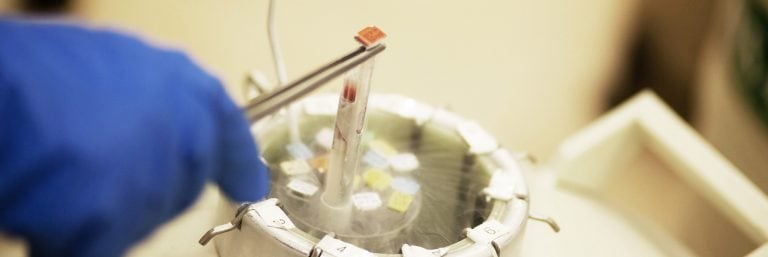
Freezing, so-called „ultra-fast freezing“
For about ten years, vitrification has also been used increasingly in the field of human medicine. This is an ultra-fast freezing process.
At the Vitrification This is a process in which the cells are deprived of intracellular water by adding certain solutions. This prevents the formation of cell-destroying ice crystals. Mechanical damage to the cellular components is unlikely to occur.
Due to the relatively high concentration of Cryoprotectants (Antifreeze) however, in principle presents a cytotoxic risk.
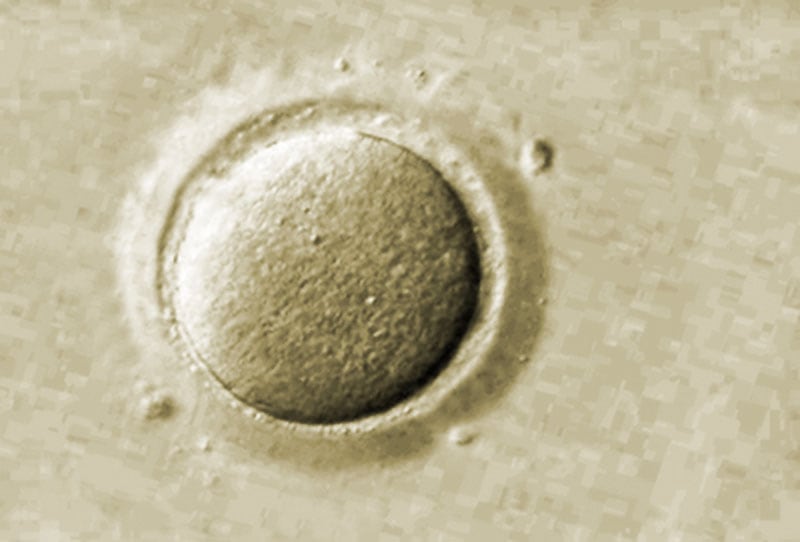
A major advantage of the method is the up to 98% „accuracy“ and the fact that it can be used with Vitrification In addition to fertilized eggs, unfertilized eggs and embryos can almost risk-free be frozen preserved.
The huge advantage of Vitrification is that, for example, unfertilized eggs from women who are undergoing chemotherapy or radiotherapy that could endanger their fertility are preserved (Fertility reserve). Also, eggs from women (between 25 and 35 years old), who, for the purpose of improving their chances of pregnancy in a later life stage (40-45(?)), undergo Fertility reserve want to create (so-called. social freezing), can be treated in this way.
Embryo freezing is used, especially in countries where embryo selection is permitted, when more embryos are available on the 5th day of culture. Blastocyst stage are present and are to be transmitted.
The disadvantage of the method for the performing laboratory is that only individual cells (and not groups of eggs) can be vitrified. Furthermore, the application of this method requires a longer „learning curve“ and significantly more dexterity than is required for conventional vitrification methods. slow freezing is required.