IUI
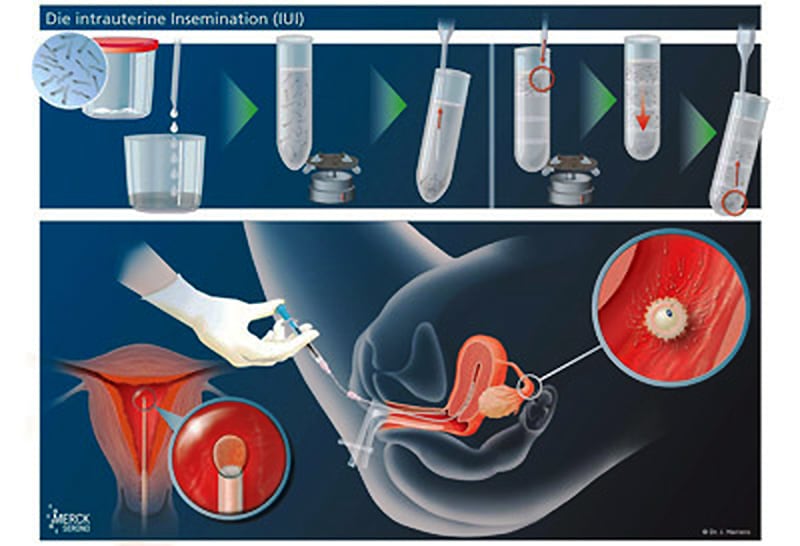
Insemination is one of the relatively simple procedures and is performed in cases of relatively mild male fertility problems or disorders in the cervical canal, e.g., disorders of mucus production or after a conectomy (incision of the external opening of the vagina). The treatment can be performed with or without hormone treatment depending on any pre-existing oocyte maturation disorder. The purpose of this treatment is to bring the prepared sperm in high concentration close to the egg cell in order to promote the occurrence of fertilization.
Therapy in the natural cycle
During a woman’s regular cycle, it is assumed that a follicle (ovary) will develop, in which the egg cell matures. Typical changes in the uterine lining and hormone levels provide clues about the stage of this development. Through one to two ultrasound examinations and close hormone monitoring, the timing of ovulation can usually be accurately predicted. Then, on the day determined accordingly, insemination (sperm transfer) can be performed. However, this requires a maximum degree of flexibility on both sides, since the body’s own rhythm dictates the schedule. It is better to „schedule“ the ovulation. This also results in an automatic improvement of the corpus luteum (yellow body) phase.
After a follicle size of approximately 18–20 mm has been reached, the ovulation can be triggered specifically with the „ovulation syringe“. Approximately 32–36 hours later, the sperm can be transferred into the uterus after appropriate preparation (Intra uterine Isemination – IUI). The pregnancy rates can be stated as maximum 10 – 15 % (20?) per treatment cycle. Intra-vaginal insemination has no advantages over natural intercourse and therefore has no therapeutic significance.
Since cysts are rarely expected after such a cycle, each cycle can be used.
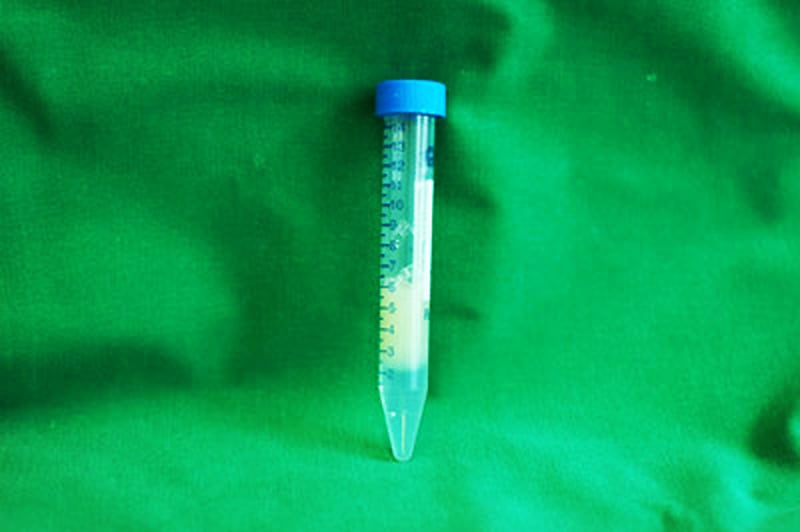
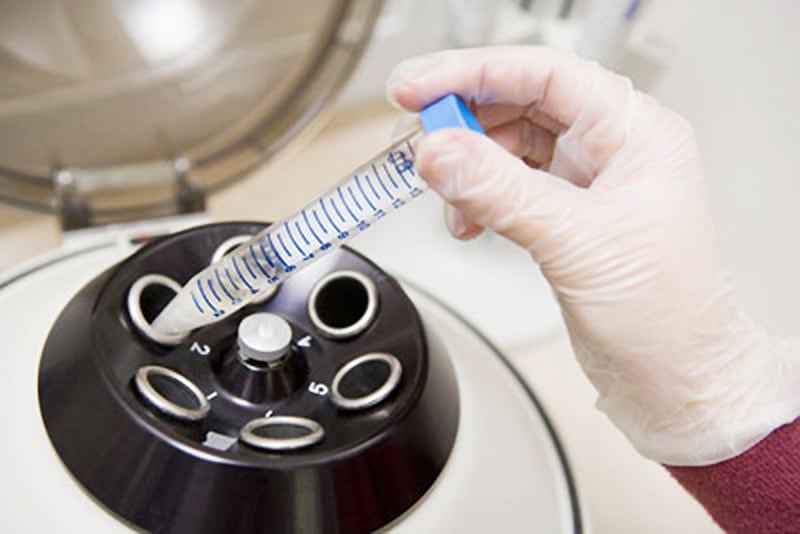
IUI in the stimulated cycle
As shown below Hormone treatment As explained, medications are used in the treatment of various hormonal imbalances, which are intended to correct the disorders.
Hormonal stimulation for IUI (intrauterine insemination / sperm transfer) is used when there is no independent follicle development (ovary follicle maturation) that leads to a „mature follicle“ (mature ovary).
Clomiphene stimulation
The simplest stimulation is achieved with the active substance Clomifencitrate, Often CC abbreviated. The intake of these tablets usually takes place over 5 days from the 5th to the 9th day of the cycle and results in an increase in FSH production (Follikel sstimulating Hhormone) as a result. The follicle growth (egg follicles) is detected by ultrasound, possibly also by Hormone tests in the blood, controlled.
After a follicle size of approximately 18–20 mm has been reached, the ovulation can be triggered specifically with the „ovulation syringe“. Approximately 32–36 hours later, the sperm can be transferred into the uterus after appropriate preparation (Intra uterine Isemination – IUI). The Pregnancy rates can be specified with a maximum of 10 – 15 % (20?) per treatment cycle. The Intravaginal insemination has no benefits compared to natural sexual intercourse and therefore has no therapeutic significance.
NOTE: The statutory health insurance funds lump the insemination with clomiphene stimulation together. UNSTIMULATED cycles. This should be taken into account when applying for cost recovery (partial reimbursement).
FSH Stimulation
If clomiphene stimulation has so far been unsuccessful (no follicle growth or only no pregnancy success), daily FSH (Follikel sstimulating Hhormone) is injected under the skin. This usually takes place on the 3rd – 11th/12th day of the cycle. The direct administration of FSH usually has a good effect, but in this case it often leads to the maturation of more than one follicle (ovary follicles) than with clomiphene stimulation. Therefore, FSH stimulation therapy should at least be performed by a specialist.
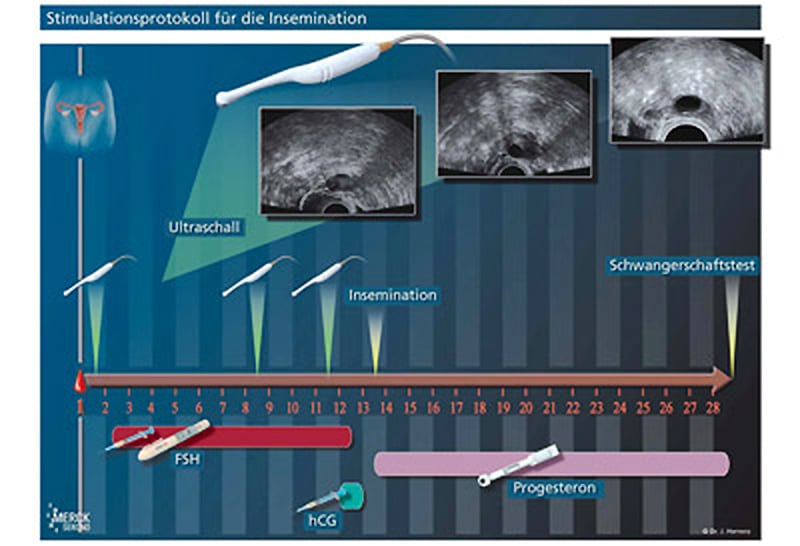
After a follicle size of approximately 18–20 mm has been reached, the ovulation can be triggered specifically with the „ovulation syringe“. Approximately 32–36 hours later, the sperm can be transferred into the uterus after appropriate preparation (Intra uterine Isemination – IUI). The pregnancy rates can be stated as maximum 10 – 15 % (20?) per treatment cycle. Intra-vaginal insemination has no advantages over natural intercourse and therefore has no therapeutic significance.
—
Schematic representations: Prof. Herrero, Barcelona