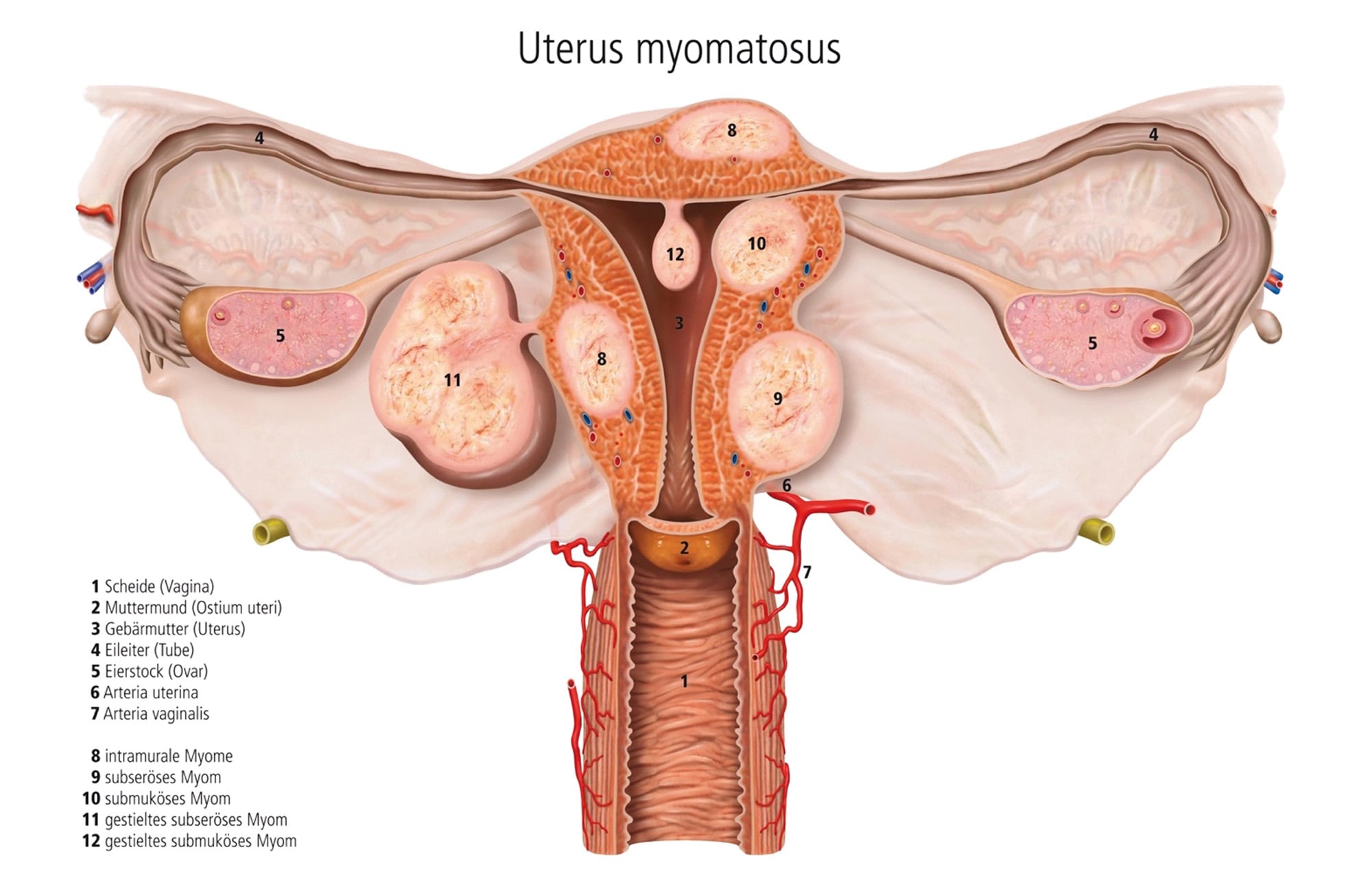

Myomas
Myomas are benign tumors of the uterus and the most common benign tumors of the female genital tract overall. They are often associated with infertility.
Myomas …
- are often associated with sarcomas (malignant). Both have nothing to do with each other. However, sarcomas cannot usually be distinguished from myomas using modern diagnostic methods.
- are hormone-dependent.
- affect up to 70 % of the women of childbearing age during their lifetime.
- are mostly frequently diagnosed in women between the age of 35 and 50.
- in the European Union (EU) and North America alone, 24 million (EU) and 20 million (North America) women have been diagnosed with myomas.
- are probably partly genetic, as they are more common in African American women than in Caucasian women.
- are symptomatic in about 30 – 50 % of the affected women.
- cause about 1/3 of the affected women to report sick regularly.
- are economically relevant. They are the reason for around 175,000 inpatient hospital stays in Germany every year.
- are the most common cause of gynecological operations, especially hysterectomies (removal of the uterus).
- but can also be asymptomatic and should then be “left in peace”