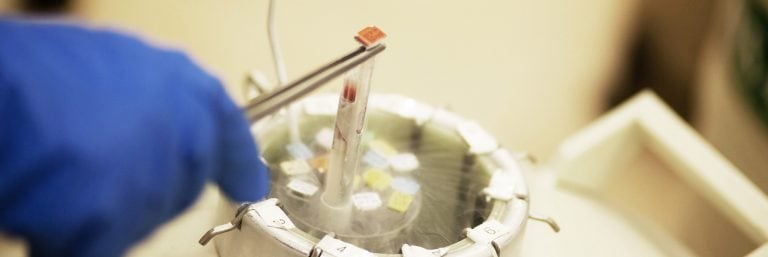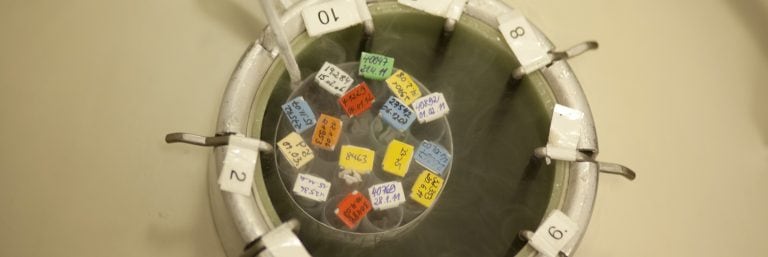

Cryoconservation
Cryoconservation (freezing storage)
For many years, it has been technically possible to freeze cells of various types, then thaw them again after months or years without causing significant damage.
The problem of freezing cell preservation lies in the potential destruction of cell organelles that are necessary for further development. This occurs mainly through the formation of ice during freezing, because the cells are composed predominantly of water. Another potential disruption is damage caused by fluid flows due to osmotic pressure within the cell. Although the risk of damage is reduced by adding antifreeze, it also has a fundamental risk potential.
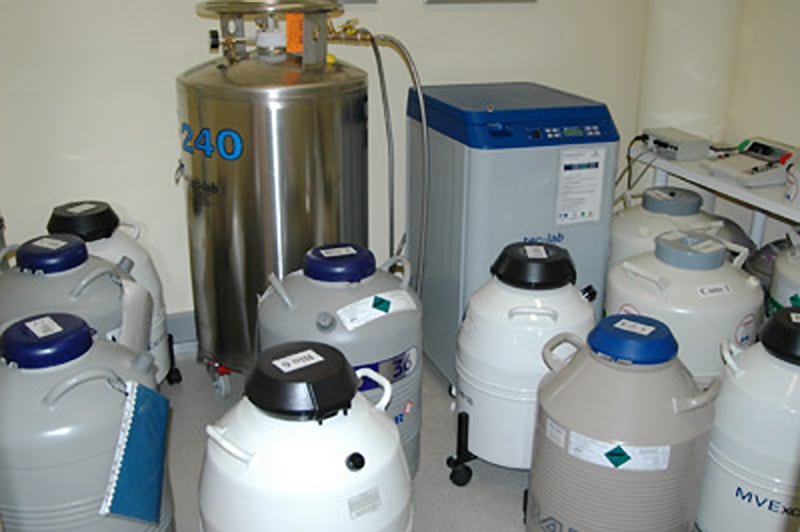
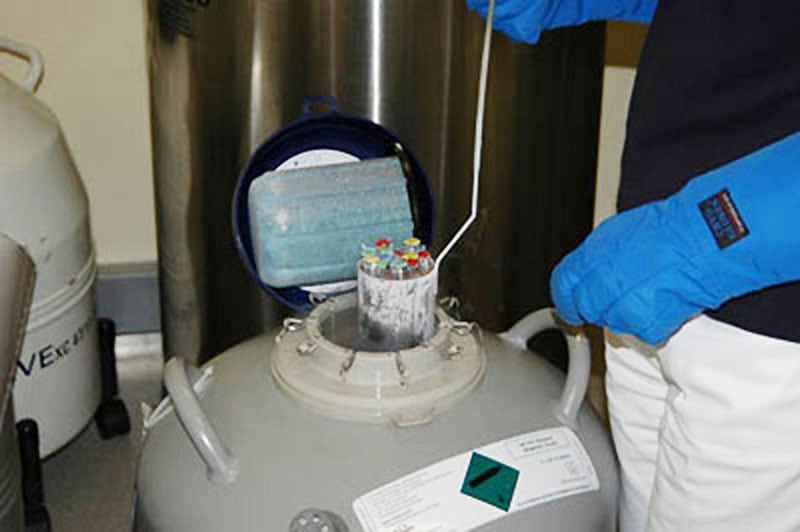
There are two cryopreservation methods:
- the so-called slow cooling, so slow freezing
Information about slow cooling or also slow-freezing
- that rapid freezing, the vitrification
Information about vitrification